Solo Eating at Korean Convenience Stores: Local Combos
This post contains affiliate links. As an Amazon Associate, we earn from qualifying purchases at no extra cost to you.
At a glance
- In shortA guide to popular solo meal combinations and bento boxes available at Korean convenience stores.
- Best forTravelers and solo diners looking for budget meals in Seoul
- ProductsSamyang Buldak Stir-Fried Noodles, Nongshim Shin Ramyun, Ottogi Spaghetti Ramen
- Spice levelSpice 4/5
- Flavorspicy, savory, sweet
- Key pointsConvenience stores in Korea offer setups built for quick solo dining. · Local hacks mix instant noodles with rice, cheese, gimbap, or sausage. · Hyeja bento boxes provide cafeteria-style meals at low price points.
- Heads-upItem availability and exact prices vary by location and promotions.
The Midnight Honbap Routine in Seoul
It was 11:30 PM on a rain-slicked Tuesday night in Mapo-gu when I ducked into my neighborhood GS25. My apartment kitchen was spotless, and I intended to keep it that way. I walked past the drink coolers straight to the hot water station, grabbed a plastic tray, and began collecting my late-night feast: a small red cup of noodles, a triangle of seaweed-wrapped rice, and a stick of string cheese. Within three minutes, I was sitting at the high counter facing the neon-lit street, watching delivery scooters splash through puddles while eating a hot, custom-made meal for under 6,000 won.
In South Korea, this practice is known as honbap (a portmanteau of honza meaning alone and bap meaning meal or rice). While eating solo used to carry a mild social stigma a decade ago, solo eating at Korean convenience store locations has transformed into a culinary subculture. Modern Korean convenience stores—primarily GS25, CU, and 7-Eleven—are engineered for the solo diner. They are micro-restaurants equipped with high-powered microwaves, instant hot water dispensers, trash separation stations, and counter seating with phone charging ports.
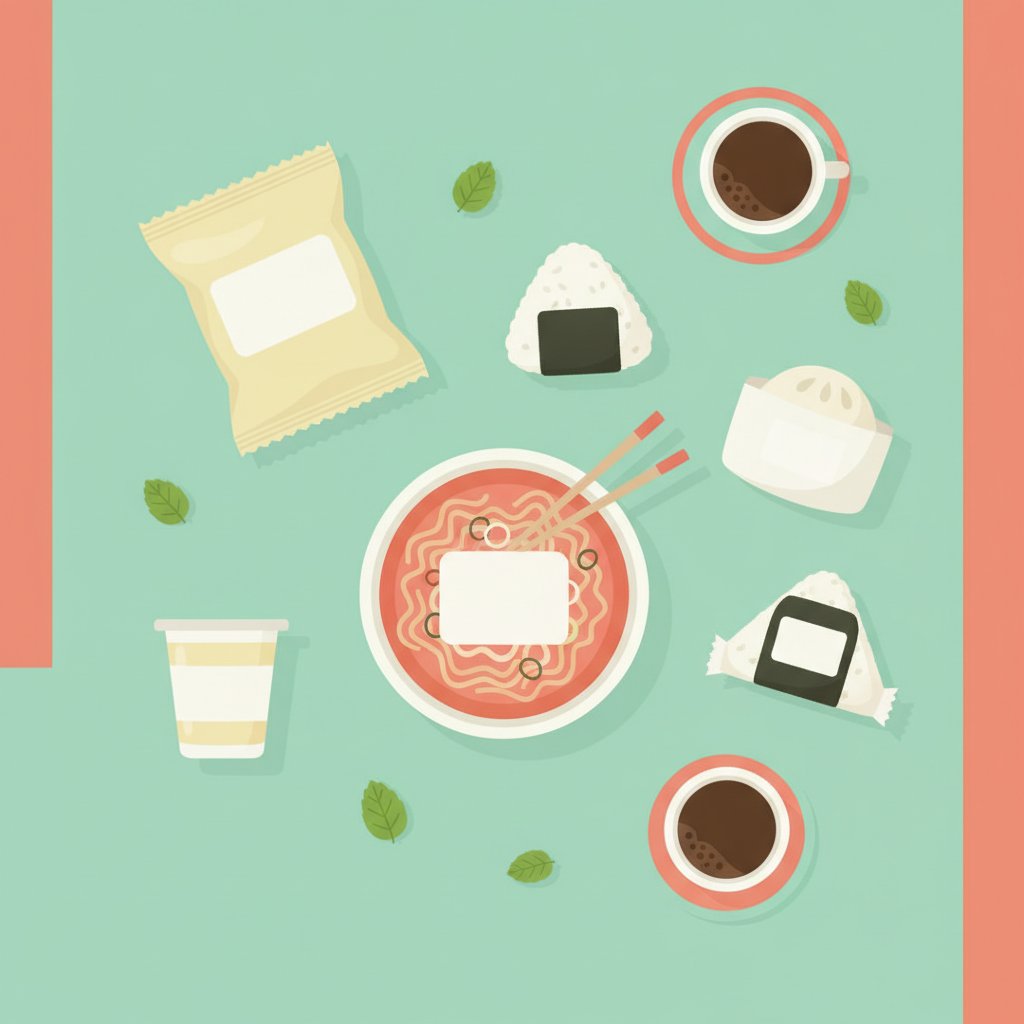
If you walk into a neighborhood convenience store in Seoul, you will see university students studying over cup ramen, office workers quietly eating bento boxes during lunch breaks, and late-night strollers mixing noodle sauces together. Here is how locals actually build satisfying solo meals out of store shelves without spending a fortune.
Top Solo Dining Combos Reviewed
1. The Cheese Buldak Rice Mashup
This is the undisputed king of midnight convenience store hacks. While Samyang Buldak Noodles are famous worldwide for their aggressive heat, locals rarely eat the instant cup completely plain when sitting down for a proper solo meal. Adding carbs and fat transforms fiery instant noodles into a comforting rice bowl.
To make this, I pick up a cup of Samyang Buldak Stir-Fried Noodles, a container of CJ Hatbahn Instant Cooked Rice, and a stick of Lotte String Cheese. You cook the noodles with boiling water from the store dispenser, drain almost all the liquid using the built-in strainer holes on the lid, mix in the spicy sauce, then dump in the heated microwave rice and shredded cheese. Pop the whole container into the store microwave for 30 seconds.
- Taste & Texture: Cheesy, intensely savory, and rich. The sticky rice absorbs the excess red pepper sauce, creating a thick, risotto-like consistency.
- Spice Level: Hotter than Nongshim Shin Ramyun, but noticeably milder than standard dry Buldak noodles because the rice starch and dairy fats coat your tongue.
- How Locals Eat It: Mix it thoroughly with a plastic spoon until the cheese forms long elastic strands wrapping around the noodles and rice grains.
2. Tuna Mayo Samgak Gimbap and Shin Ramyun Cup
If you want the classic daily lunch that kept generations of Korean students fed, this pair is the golden standard for solo eating at Korean convenience store counters. It balances wet and dry, spicy and mild, cold and hot.
Grab a standard red cup of Nongshim Shin Ramyun and a Tuna Mayonnaise Samgak Gimbap (triangular rice ball wrapped in dried laver). The triangular packaging uses a clever three-step tear strip that keeps the crisp nori separate from the moist rice until the second you peel it open.
- Taste & Texture: Crisp, salty nori with rich, sweet-savory tuna mayonnaise tucked inside warm rice, paired against a peppery, beef-based noodle broth.
- Spice Level: Moderately spicy. Shin Ramyun sits at a solid baseline Korean spice level—spicier than Jin Ramyun Mild, but far below Buldak.
- How Locals Eat It: Nibble the sharp corners of the triangular gimbap first, take a sip of hot broth, and once you finish the noodles, drop the remaining core of the rice ball directly into the leftover soup to make a quick porridge.
3. The Legendary Mark Meal (Mark Jeong-sik)
Named after an idol group member after a fan account posted the recipe online years ago, the Mark Meal remains a permanent fixture of Korean convenience store lore. It is an unapologetic carb-heavy dish that combines sweet, savory, and spicy elements into a single microwave tray.
The ingredient list requires four items: a pack of Ottogi Spaghetti Ramen, a cup of Samyang Buldak Noodles (or Giant Tteokbokki), a sliceable CJ Maxbon Sausage, and shredded mozzarella cheese from the refrigerated dairy section. You cook both noodle bases, combine them in the larger plastic bowl, slice the sausage over the top, cover it generously in cheese, and microwave until melted.
- Taste & Texture: A sweet tomato sauce baseline laced with fierce capsaicin spice, balanced by smoky sausage bites and gooey melt.
- Spice Level: Sweeter and much milder than standard Buldak noodles; roughly comparable to or slightly spicier than Shin Ramyun due to the tomato pasta sauce balancing the pepper paste.
- How Locals Eat It: Eat directly out of the bowl with plastic chopsticks, winding the sausage slices up with cheese-coated noodles.
4. GS25 Hyeja-dosirak (The Honest Bento Box)
For days when you want a real home-style meal (jipbap) rather than instant noodles, convenience store bento boxes (dosirak) are remarkably good. The GS25 Hyeja brand line—named after beloved veteran Korean actress Kim Hye-ja—gained legendary status in Korea for offering huge portions and balanced side dishes at accessible prices.
These pre-packaged trays typically feature a bed of white or black sesame rice surrounded by spicy stir-fried pork (jeyuk bokkeum), sweet soy-glazed bulgogi, rolled omelet slices (gyeran-mari), and stir-fried kimchi.
- Taste & Texture: Tastes very close to a small neighborhood cafeteria meal. The pork has a smoky pepper glaze, while the kimchi offers a crunchy, sour contrast.
- Spice Level: Mild to gentle. Milder than Shin Ramyun, suitable for almost any palate.
- How Locals Eat It: Remove the clear plastic lid before microwaving (usually 1 minute 30 seconds to 2 minutes at store microwave settings). Locals often grab a small carton of Binggrae Banana Flavored Milk or hot barley tea to wash it down.
| Combo Name | Key Ingredients | Approximate Price Range |
|---|---|---|
| Cheese Buldak Rice | Samyang Buldak Cup, CJ Hatbahn, String Cheese | Around 4,500 – 6,000 won |
| Classic Gimbap & Noodle | Shin Ramyun Cup, Tuna Mayo Samgak Gimbap | Around 2,500 – 3,500 won |
| The Mark Meal | Ottogi Spaghetti, Buldak, CJ Sausage, Cheese | Around 6,000 – 8,000 won |
| Hyeja Dosirak Tray | Pre-made Bento (Pork Bulgogi, Rice, Banchan) | Around 4,500 – 5,500 won |
Note: Exact item availability and prices vary slightly depending on individual store locations, current monthly promotions (like 1+1 or 2+1 deals), and franchisor chains.
🛒 Solo Eating at Korean Convenience Stores
As an Amazon Associate we earn from qualifying purchases.
Buy on Amazon →How to Get It Abroad
Recreating authentic Korean convenience store combos outside of Korea is surprisingly easy today because major manufacturers export their core products globally.
- H Mart & Local Asian Markets: Large Asian grocery chains stock the full range of instant noodles mentioned here, including Samyang Buldak, Nongshim Shin Ramyun, and Ottogi Spaghetti. You will also easily find CJ Hatbahn cooked rice bowls, CJ Maxbon sausages, and pre-made frozen or fresh gimbap in the refrigerated aisles.
- Amazon & Online Retailers: You can purchase multi-packs of Samyang Buldak cups and CJ Hatbahn instant rice directly online. Many sellers also offer bundled Korean snack and ramen starter packs.
- Local Supermarkets: mainstream Western grocery stores now regularly aisle-stock Nongshim Shin Ramyun and Samyang Buldak noodles in their international food sections.
Verdict
Solo eating at Korean convenience store chains is not just a cheap fix for hunger; it is a satisfying, customizable, and completely judgment-free dining experience tailored for modern life. Whether you assemble a complex noodle hack or quietly eat a fresh pork dosirak while looking out the window, it captures the cozy, efficient charm of daily life in Seoul.
Overall Solo Dining Experience Score: 9.5 / 10
🛒 Solo Eating at Korean Convenience Stores
As an Amazon Associate we earn from qualifying purchases.
Buy on Amazon →FAQ
Can you actually sit and eat inside every Korean convenience store?
Not every single store, but the vast majority of medium to large GS25, CU, and 7-Eleven outlets feature built-in counter seating with stools, high-wattage microwave stations, and hot water dispensers for customer use. Smaller alleyway kiosks may only offer outdoor plastic tables or standing counters during warm weather months.
How do you use the hot water and microwave stations in a Korean CVS?
The service area is self-serve. Hot water dispensers have a push-button lever designed specifically to fill noodle cups safely. Microwaves generally feature simple timer buttons labeled in seconds (e.g., 30 sec, 1 min, 2 min). When finished eating, customers are expected to clear their spot by separating liquids into the designated sink drain, tossing paper/plastic containers into recycling bins, and wiping down their counter space.
What is the average cost of a solo meal at a Korean convenience store?
A basic meal like a small cup ramen and a triangle gimbap costs around 2,500 to 3,500 won. A full multi-item noodle mashup or a high-end bento box (dosirak) typically runs between 4,500 and 7,500 won. Prices vary slightly by store brand, but it remains one of the most budget-friendly ways to eat a hot meal in Seoul.
More on Meal Combos & Hacks
- Top Korean Convenience Store BreakfastsA guide to cheap and tasty Korean convenience store breakfast options under ₩5,000.
- Korean Convenience Store Food HacksA guide to combining Korean convenience store products into upgraded meals and desserts.
- Quick Korean CVS Lunch IdeasA guide to quick Korean convenience store lunch options beyond traditional pre-made dosirak lunch boxes.
See every Meal Combos & Hacks post in our CVS Meals guide.
Handy toolsRamyeon spice chart · Korean label decoder · Korean Snack Finder
🛒 Solo Eating at Korean Convenience Stores
As an Amazon Associate we earn from qualifying purchases.
Buy on Amazon →More Mart Finds
- Best Korean CVS Seasoned Eggs Tested: Gamdongran to Mayak
- I Tried Every Instant Rabokki Cup in Seoul: Here Are the Best
- Best Korean CVS Smoked Duck and Chicken Packs Reviewed
- Best Korean CVS Tinned Seafood Tested and Reviewed
🛒 Solo Eating at Korean Convenience Stores
As an Amazon Associate we earn from qualifying purchases.
Buy on Amazon →